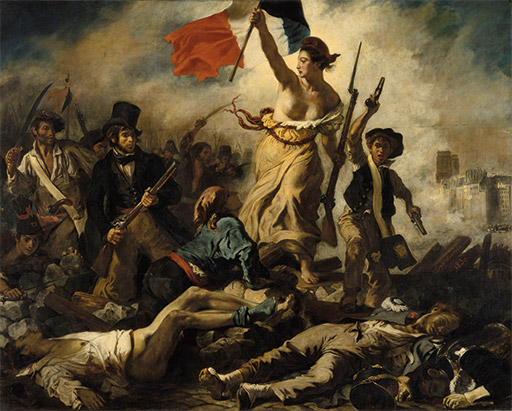
Beauty, far from remaining a universal truth of the matter, has constantly been political. What we call “attractive” is often formed not only by aesthetic sensibilities but by programs of power, wealth, and ideology. Throughout centuries, artwork is a mirror - reflecting who retains influence, who defines style, and who receives to determine exactly what is worthy of admiration. Let's have a look at with me, Gustav Woltmann.
Natural beauty like a Resource of Authority
All through historical past, natural beauty has seldom been neutral. It's functioned to be a language of energy—meticulously crafted, commissioned, and managed by those who seek out to condition how Modern society sees itself. From your temples of Historical Greece to your gilded halls of Versailles, beauty has served as the two a symbol of legitimacy and a way of persuasion.
During the classical world, Greek philosophers like Plato connected splendor with ethical and mental advantage. The perfect physique, the symmetrical confront, along with the well balanced composition weren't just aesthetic beliefs—they mirrored a perception that get and harmony were divine truths. This association in between visual perfection and moral superiority became a foundational idea that rulers and institutions would repeatedly exploit.
Throughout the Renaissance, this concept reached new heights. Wealthy patrons just like the Medici family members in Florence employed art to undertaking influence and divine favor. By commissioning functions from masters like Botticelli and Michelangelo, they weren’t just decorating their surroundings—they had been embedding their energy in cultural memory. The Church, as well, harnessed elegance as propaganda: awe-inspiring frescoes and sculptures in cathedrals were designed to evoke not merely religion but obedience.
In France, Louis XIV perfected this tactic Along with the Palace of Versailles. Just about every architectural depth, each and every painting, every back garden route was a calculated statement of order, grandeur, and control. Natural beauty grew to become synonymous with monarchy, Together with the Sunlight King himself positioned as the embodiment of perfection. Artwork was no more just for admiration—it was a visible manifesto of political electricity.
Even in modern day contexts, governments and corporations go on to implement attractiveness as being a Software of persuasion. Idealized advertising and marketing imagery, nationalist monuments, and sleek political strategies all echo this very same ancient logic: Command the impression, and also you Command perception.
Thus, magnificence—usually mistaken for something pure or common—has lengthy served to be a delicate yet powerful form of authority. Irrespective of whether by means of divine beliefs, royal patronage, or digital media, individuals that outline beauty form not merely art, though the social hierarchies it sustains.
The Economics of Style
Artwork has usually existed for the crossroads of creativity and commerce, along with the concept of “style” often acts as being the bridge in between The 2. Whilst magnificence may seem to be subjective, history reveals that what society deems attractive has often been dictated by People with financial and cultural power. Style, With this sense, turns into a form of forex—an invisible however powerful evaluate of course, education, and accessibility.
From the 18th century, philosophers like David Hume and Immanuel Kant wrote about flavor as a mark of refinement and moral sensibility. But in follow, flavor functioned to be a social filter. The ability to enjoy “fantastic” artwork was tied to at least one’s exposure, training, and wealth. Art patronage and accumulating grew to become don't just a matter of aesthetic pleasure but a Show of sophistication and superiority. Possessing art, like possessing land or wonderful garments, signaled a person’s position in society.
From the 19th and 20th centuries, industrialization and capitalism expanded entry to art—but additionally commodified it. The increase of galleries, museums, and later on the global art market place remodeled style into an economic program. The value of a painting was no longer defined solely by artistic advantage but by scarcity, market demand from customers, and the endorsement of elites. This commercialization blurred the road concerning inventive benefit and money speculation, turning “style” into a Device for the two social mobility and exclusion.
In modern culture, the dynamics of taste are amplified by technology and branding. Aesthetics are curated through social media marketing feeds, and Visible type is becoming an extension of non-public identity. Yet beneath this democratization lies a similar financial hierarchy: individuals who can manage authenticity, access, or exclusivity condition tendencies that the rest of the globe follows.
Ultimately, the economics of flavor reveal how elegance operates as both a mirrored image plus a reinforcement of electrical power. Whether or not as a result of aristocratic collections, museum acquisitions, or electronic aesthetics, taste continues to be considerably less about specific preference and more details on who will get to determine what on earth is worthy of admiration—and, by extension, what is worthy of investing in.
Rebellion Versus Classical Splendor
All through record, artists have rebelled in opposition to the established beliefs of elegance, complicated the notion that artwork must conform to symmetry, harmony, or idealized perfection. This rebellion is not really simply aesthetic—it’s political. By rejecting classical standards, artists concern who defines elegance and whose values All those definitions serve.
The nineteenth century marked a turning point. Movements like Romanticism and Realism started to drive again against the polished beliefs of the Renaissance and Enlightenment. Painters for example Gustave Courbet depicted laborers, peasants, and the unvarnished realities of daily life, rejecting the tutorial obsession with mythological and aristocratic subjects. Magnificence, as soon as a marker of standing and Command, became a Resource for empathy and truth. This shift opened the doorway for artwork to signify the marginalized along with the everyday, not only the idealized several.
By the 20th century, rebellion grew to become the norm rather then the exception. The Impressionists broke conventions of precision and perspective, capturing fleeting sensations as an alternative to official perfection. The Cubists, led by Picasso and Braque, deconstructed form completely, reflecting the fragmentation of contemporary lifetime. The Dadaists and Surrealists went further nevertheless, mocking the incredibly establishments that upheld traditional attractiveness, observing them as symbols of bourgeois complacency.
In Just about every of such revolutions, rejecting beauty was an act of liberation. Artists sought authenticity, emotion, and expression above polish or conformity. They unveiled that artwork could provoke, disturb, or maybe offend—and still be profoundly meaningful. This democratized creativity, granting validity to various perspectives and encounters.
Right now, the rebellion in opposition to classical magnificence proceeds in new sorts. From conceptual installations to electronic artwork, creators use imperfection, abstraction, and perhaps chaos to critique consumerism, colonialism, and cultural uniformity. Natural beauty, once static and exclusive, has become fluid and plural.
In defying conventional elegance, artists reclaim autonomy—not only more than aesthetics, but above which means itself. Every act of rebellion expands the boundaries of what art can be, ensuring that natural beauty continues to be a matter, not a commandment.
Magnificence while in the Age of Algorithms
While in the digital era, beauty has long been reshaped by algorithms. What was at the time a subject of style or cultural dialogue is now more and more filtered, quantified, and optimized through details. Platforms like Instagram, TikTok, and Pinterest impact what hundreds of thousands perceive as “wonderful,” not by curators or critics, but by way of code. The aesthetics that rise to the best generally share something in typical—algorithmic acceptance.
Algorithms reward engagement, and engagement favors designs: symmetry, vibrant hues, faces, and simply recognizable compositions. Consequently, electronic splendor tends to converge around formulation that make sure you the equipment in lieu of challenge the human eye. Artists and designers are subtly conditioned to develop for visibility—art that performs well, in lieu of art that provokes assumed. This has designed an echo chamber of style, wherever innovation hazards invisibility.
Nonetheless the algorithmic age also democratizes splendor. As read more soon as confined to galleries and elite circles, aesthetic impact now belongs to anybody that has a smartphone. Creators from various backgrounds can redefine Visible norms, share cultural aesthetics, and attain world audiences without having institutional backing. The electronic sphere, for all its homogenizing tendencies, has also become a web-site of resistance. Independent artists, experimental designers, and unconventional influencers use these very same platforms to subvert visual developments—turning the algorithm’s logic versus itself.
Synthetic intelligence provides Yet another layer of complexity. AI-created art, able to mimicking any design and style, raises questions about authorship, authenticity, and the future of Resourceful expression. If machines can make endless versions of magnificence, what gets to be on the artist’s eyesight? Paradoxically, as algorithms produce perfection, human imperfection—the trace of individuality, the unforeseen—grows more useful.
Magnificence in the age of algorithms Hence displays both of those conformity and rebellion. It exposes how energy operates by way of visibility And exactly how artists continually adapt to—or resist—the techniques that form notion. During this new landscape, the true challenge lies not in pleasing the algorithm, but in preserving humanity in it.
Reclaiming Natural beauty
Within an age where attractiveness is frequently dictated by algorithms, marketplaces, and mass attractiveness, reclaiming natural beauty has become an act of quiet defiance. For centuries, elegance is tied to electricity—outlined by people that held cultural, political, or financial dominance. Still today’s artists are reasserting elegance not as being a Instrument of hierarchy, but as being a language of reality, emotion, and individuality.
Reclaiming attractiveness implies liberating it from external validation. Rather than conforming to developments or information-driven aesthetics, artists are rediscovering beauty as something deeply personal and plural. It might be Uncooked, unsettling, imperfect—an straightforward reflection of lived practical experience. No matter if by abstract types, reclaimed supplies, or personal portraiture, present-day creators are hard the concept that attractiveness should always be polished or idealized. They remind us that natural beauty can exist in decay, in resilience, or from the standard.
This shift also reconnects beauty to empathy. When natural beauty is no more standardized, it turns into inclusive—capable of symbolizing a broader variety of bodies, identities, and perspectives. The motion to reclaim splendor from industrial and algorithmic forces mirrors broader cultural endeavours to reclaim authenticity from devices that commodify focus. In this perception, attractiveness gets to be political all over again—not as propaganda or standing, but as resistance to dehumanization.
Reclaiming beauty also consists of slowing down in a fast, use-driven environment. Artists who decide on craftsmanship more than immediacy, who favor contemplation about virality, remind us that attractiveness often reveals by itself through time and intention. The handmade brushstroke, the imperfect texture, The instant of silence between Seems—all stand against the moment gratification society of digital aesthetics.
Finally, reclaiming attractiveness is not about nostalgia to the earlier but about restoring depth to perception. It’s a reminder that magnificence’s accurate ability lies not in control or conformity, but in its capacity to move, link, and humanize. In reclaiming natural beauty, art reclaims its soul.
Comments on “The Politics of Magnificence By Gustav Woltmann”